Electrical inspection under the NIV: when the safety certificate is due
The network operator requests the safety certificate six months before the inspection period ends. What the NIV requires of the owner and who may carry out the inspection.
Hoang Nguyen · 27 September 2026 · 7 min read
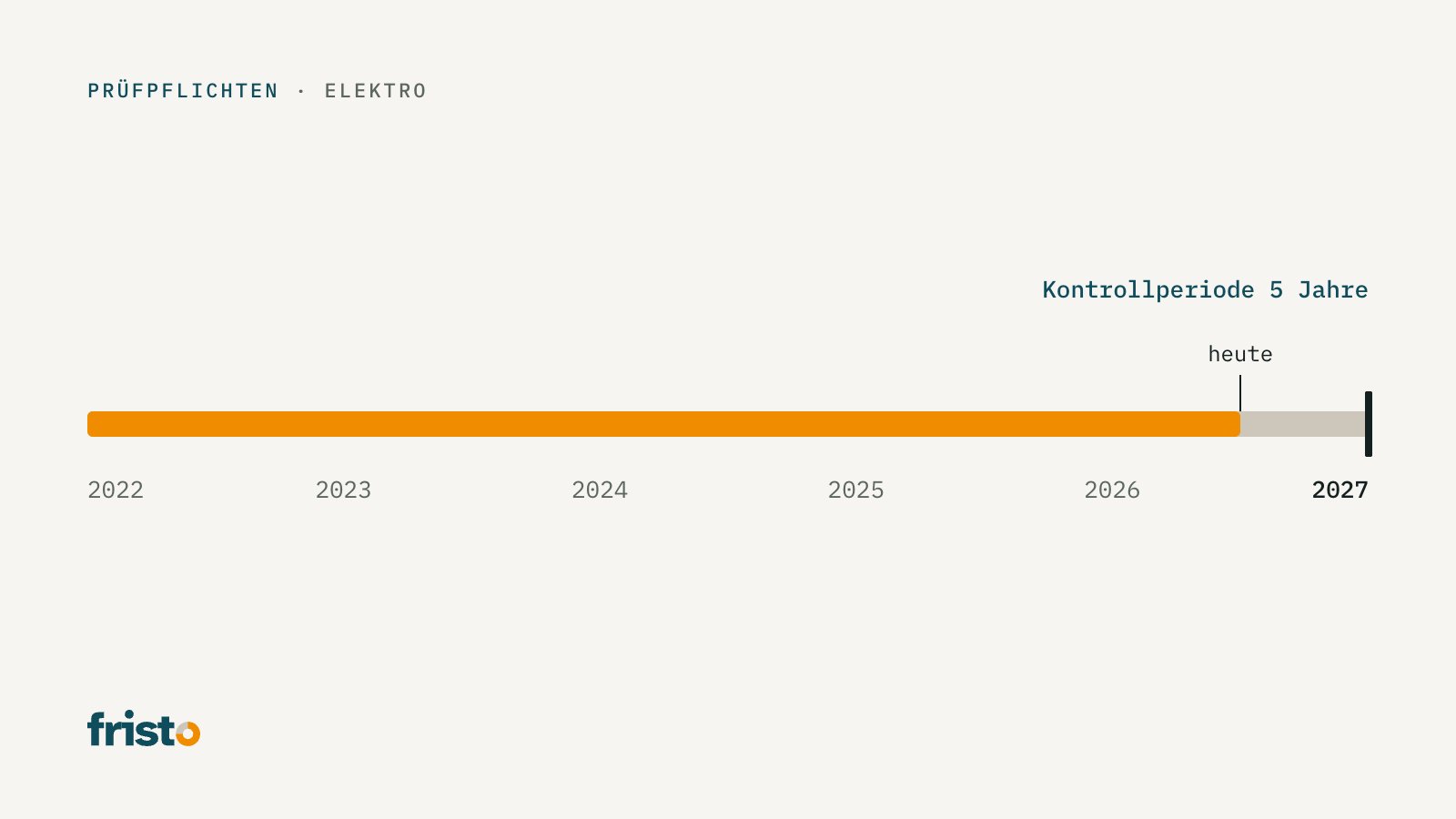
In October, a letter from the network operator lands on the management's desk: a safety certificate for the production hall has to be submitted by the end of March. The letter goes to the caretaker, and the caretaker phones the electrical installer who has looked after the hall for years. The installer says he cannot carry out the periodic inspection, because he extended the installation himself.
This is how the electrical inspection begins in many businesses: with a letter that comes as a surprise, even though the deadline has been fixed for years. Yet the rule is simple. The Low Voltage Installations Ordinance (Niederspannungs-Installationsverordnung, NIV) sets out how often electrical installations must be inspected, who may do so and what the network operator requires.
This article explains the owner's obligations, the inspection periods, the role of the network operator and how to plan the inspection so that the letter no longer surprises anyone.
What the NIV requires of the owner
The party responsible is the owner of the installation, not the tenant, not the installer and not the network operator. Article 5 of the NIV puts it this way: the owner ensures that the electrical installations comply with the requirements of the ordinance at all times, and must provide the safety certificate on request.
Article 5 sets out four points:
- Providing the safety certificate: on request and at the end of each inspection period.
- Keeping documents: technical documents such as diagrams, plans and operating instructions for the entire service life of the installation, and the basis for the safety certificate for at least one inspection period.
- Rectifying defects: without delay, as soon as they are known.
- Reporting defects: anyone who uses an installation owned by someone else, such as a tenant, must report any defects they find to the owner without delay.
When the safety certificate is due
How often an installation is inspected depends on how it is used. The inspection periods are listed in the annex to the NIV and range from one to twenty years. Some examples:
| Inspection period | Examples from the NIV annex |
|---|---|
| 1 year | Installations on building sites and at markets |
| 3 years | areas with an explosion hazard, such as petrol stations and vehicle repair workshops |
| 5 years | Industrial and large commercial premises; rooms for larger numbers of people such as hotels, restaurants, care homes and school buildings; charging stations for electric vehicles in public spaces |
| 10 years | including agricultural holdings and churches |
| 20 years | for example residential buildings |
The table shows examples, not the full list. You do not have to work out for yourself which period applies to your installation: it is stated in the last safety certificate, because the inspection period is one of its mandatory details (NIV Art. 37).
Two special cases call for a date of their own:
- New installation: if the owner takes over from the installer an installation with an inspection period of less than twenty years, or a power generation plant connected to the grid, such as a photovoltaic system, they must arrange an acceptance inspection by an independent inspection body within six months (Art. 35).
- Sale of a property: installations with a ten- or twenty-year inspection period must be inspected on every change of ownership if the last inspection was more than five years ago (annex, section 3).
Who may carry out the inspection
The periodic inspection is carried out by an independent inspection body or an accredited inspection agency, commissioned by the owner (Art. 32). For certain special installations, only an accredited inspection agency is permitted.
Independence is decisive. Article 31 rules out inspection by anyone who was involved in the planning, construction, modification or repair of the installation. The installer who extended the hall three years ago is therefore excluded. He may, however, rectify the defects the inspection body finds.
The result is the safety certificate. Among other things, it states the installation, the inspection period and the result of the inspection; a measurement and test report forms part of it.
What the network operator requires
The network operator keeps a register of the installations in its network and asks the owners in writing, at least six months before the inspection period ends, to submit the safety certificate by the end of the period (Art. 36 para. 1). This is the letter from the introduction.
If the certificate is not submitted on time, the process continues in stages:
- The deadline may be extended.
- If the certificate is still not provided after two reminders, the network operator hands enforcement over to the Federal Inspectorate for Heavy Current Installations ESTI (Art. 36 para. 3).
- If defects that have been identified are not rectified within the deadline, the ESTI may order third parties to rectify them at the owner's expense, or have the power supply to the affected parts of the installation cut off (Art. 40).
In addition, network operators and the ESTI carry out spot checks on installations (Art. 39). If defects are found, the owner bears the cost of the inspection.
Plan the inspection instead of waiting for the letter
The deadline runs from the last inspection, not from the letter. If you know when the period ends, you can schedule the inspection for a quiet time. Here is how to proceed:
- Find the last safety certificate, for each building or main distribution board. It gives you the date and the inspection period.
- Enter the end of the period as a deadline and allow a generous lead time. Six months is enough for a quotation, the inspection and rectifying defects, provided nothing goes wrong.
- Appoint an independent inspection body, not the firm that works on the installation.
- Allow time for rectifying defects. The inspection body records the defects, an installer rectifies them, and only then is the certificate complete.
- File the certificate where your successor will find it in five years, together with the measurement and test report.
Remember systems that were added later. According to the NIV annex, a photovoltaic system has the same inspection period as the installation of the property it is connected to. According to an ESTI notice, charging stations on private land likewise follow the period of the property they are installed at. The article Einen Prüfplan für die eigenen Liegenschaften aufbauen shows how the electrical inspection fits into a joint plan with your other inspection obligations.
Rule of thumb: The inspection period is stated in the last safety certificate, and the deadline runs from the last inspection. If you only react to the network operator's letter, you have six months left for the quotation, the inspection and rectifying defects combined.
This article is general information and not legal advice. In individual cases, the regulations and the requirements of the competent body apply; for electrical inspections, that means the network operator and the ESTI.
How Fristo helps
For every main and sub-distribution board you have recorded, Fristo suggests the template "Periodic inspection of the electrical installation", with the legal basis, the source and a note on who may carry out the inspection. When you adopt it, you enter the date of the last inspection or the first due date from your safety certificate; no deadline is created until you have confirmed that the template applies to your business. You can set the lead time for the work order up to 180 days before the due date, and you file the safety certificate as an inspection report on the work order.
Sources
- Ordinance on Low Voltage Electrical Installations (NIV), SR 734.27, Art. 5, 31, 32, 35, 36, 37, 39, 40 and annex — Federal Chancellery, Fedlex: fedlex.admin.ch/eli/cc/2002/22/de
- Ordinance of the DETEC on Low Voltage Electrical Installations, SR 734.272.3, Art. 14 (measurement and test report) — Federal Chancellery, Fedlex: fedlex.admin.ch/eli/cc/2018/288/de
- Low voltage installations — Federal Inspectorate for Heavy Current Installations ESTI: esti.admin.ch/de/themen/niederspannungsinstallationen
- Notice on inspection periods, including for charging stations (No. 2020-0601) — ESTI: esti.admin.ch, PDF
- Periodic inspection on change of ownership (Bulletin 3/2019) — ESTI: esti.admin.ch, PDF